Drop in an operator's financial statement. finvuw detects structure, normalizes accounts, and outputs standardized data ready for underwriting, portfolio review, analysis and benchmarking — in seconds, not hours.
A deterministic pipeline that handles the grunt work — so your analysts can focus on the decision, not the spreadsheet.
Upload any .xlsx, .xlsm, or .csv export. Handles messy headers, merged cells, blank rows, and multi-sheet workbooks automatically.
Structure detection finds date headers, account columns, and data rows. Wide-format melted into clean long-format records.
Each line is enriched with region, section, cost nature, and line type — context that makes downstream analysis powerful.
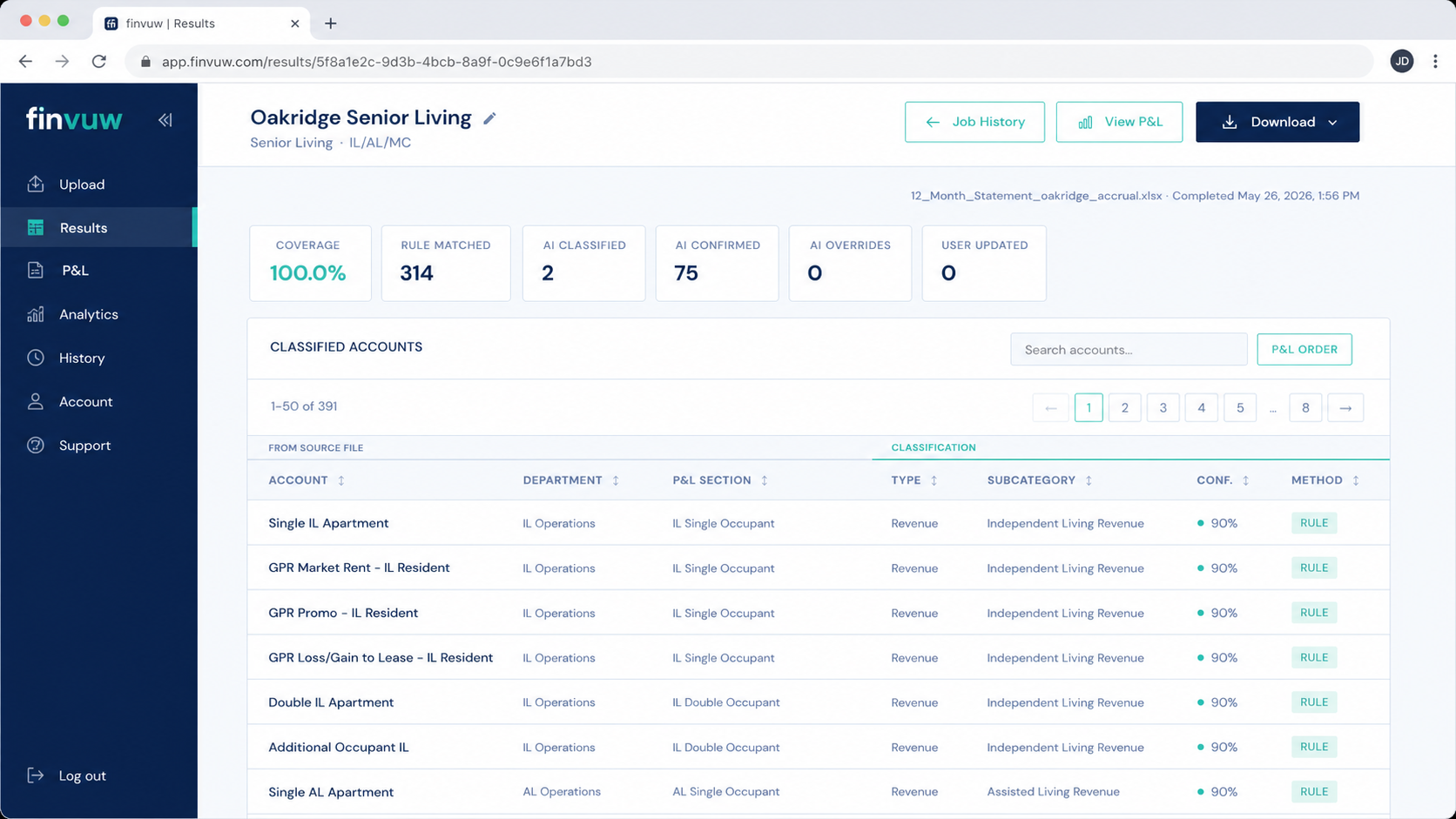
Rules, exact matches, saved mappings, and targeted AI fallback work together to map accounts into the selected asset class taxonomy.
Coverage, confidence, and method indicators highlight accounts that may need review before you download the final output.
Download clean CSV/XLSX data or populate an available Excel template — standardized, comparable, and ready for analysis.
Acquisition teams receive financials from many operators in many formats. finvuw turns them into one comparable view.
Sponsors preparing LP materials can normalize data-room files into cleaner support for forecasts, reporting, and investment narratives.
Investment sales brokers normalize seller financials before marketing - faster BOVs and more credible deal packages.
Credit analysts need comparable financials across loans and borrowers. finvuw standardizes operator exports in seconds.
Portfolio teams can consolidate monthly financials across properties, operators, and formats for recurring review and reporting.
Lean investment teams can compare opportunities and operating updates without rebuilding every seller or operator file by hand.
Advisory teams can turn client-provided financials into consistent workpapers for analysis, reporting, and recommendations.
Third-party advisors processing multi-asset portfolios eliminate hours of manual remapping per engagement.
Your analysts are spending Wednesday afternoons remapping operator charts of accounts. That ends here.
Census, Occupancy, AL/IL/MC Revenue, Payroll Burden, Agency Labor — the first supported taxonomy is built for senior living underwriting, with more asset classes on the roadmap.
Rules and exact matching handle the majority. LLM fallback only kicks in when needed — giving you auditable, consistent results.
File #1 from Operator A and File #12 from Operator B come out with identical structure, categories, and sort order. Every time.
Operator tools are built for operators. finvuw is built for analysts who need messy property financials translated into comparable underwriting data.
This is what your analyst's afternoon looks like without finvuw — manual remapping, account by account, hoping nothing gets miscategorized before the IC meeting.